
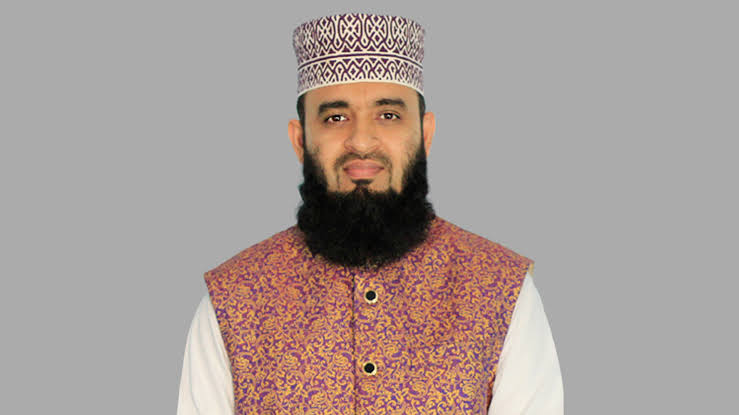
Published: 25 January 2024 | Incident Date: 24 January 2024 | Bangladesh
Bangladeshi Islamic preacher Mizanur Rahman Azhari published derogatory and
hateful remarks about transgender people on social media, rejecting their
gender identities and portraying transgender recognition as a threat to
religious beliefs, the conventional male-female gender structure, and the
future of humanity. On the night of 24 January 2024, Azhari posted a statement
on his X (formerly Twitter) account in which he used an analogy involving a
fox and chickens to dismiss transgender people’s self-identified gender. He
also portrayed gender diversity as a destructive ideology, framed teaching
children about transgender identities as an attempt to corrupt their natural
disposition, and called on people regardless of religion, ethnicity or
political ideology to publicly oppose it. His remarks were reported by several
Bangladeshi news outlets, including Dhaka Post and Kalbela, on 25 January 2024.
Azhari began his argument against transgender identities by invoking Islamic
religious texts. According to his statement as reported by Dhaka Post, he
referred to Sahih al-Bukhari 5885, which addresses religious prohibitions
concerning men and women imitating the opposite sex. He used this religious
reference to support his rejection of transgender identities. He also cited
verse 119 of Surah An-Nisa in the Quran, which contains a reference to altering
God’s creation under the influence of Satan. Through these religious references,
Azhari portrayed transgender identity as contrary to religious teachings and
associated it with an attempt to alter what he regarded as the natural order
of creation. His framing positioned transgender identity not as a matter of
personal identity or lived human experience, but as something he considered
religiously prohibited.
Azhari then used an animal analogy to reject transgender people’s
self-identification. He asked whether a fox that considered itself a chicken
should be allowed into a chicken coop, before rejecting that possibility on
the grounds that the chickens would be endangered. He applied this analogy to
transgender identities, arguing that recognition of gender identities outside
the conventional male-female binary would similarly threaten the established
gender structure. By comparing transgender self-identification with a fox
claiming to be a chicken, his statement reduced the lived identities of
transgender people to what he presented as an inherently impossible and
irrational claim. The predator-and-prey nature of the analogy also framed
recognition of transgender people as potentially dangerous to others.
Azhari’s statement presented the conventional binary understanding of men and
women as a fixed and unchangeable natural structure and claimed that transgender
recognition would threaten that structure. In his framing, recognising a person
according to their gender identity was not merely a matter of individual identity
or social recognition; it was presented as something that could undermine the
existence of conventional male and female identities. This placed the recognition
of transgender people in conflict with the identities and interests of others,
creating a narrative in which acknowledging one marginalised population was
portrayed as potentially harmful to the rest of society.
Children and education formed another significant part of Azhari’s statement.
He portrayed the introduction of transgender-related concepts to children as an
attempt to corrupt what he regarded as their natural disposition and characterised
such ideas as destructive to the future of humanity. His remarks framed education
about transgender identities not as an opportunity for children to learn about
human diversity, but as the imposition of a harmful ideology. He warned of
consequences for future generations and presented opposition to transgender-related
education as necessary for protecting children and preserving the future of society.
Video Documentation
Kalbela video report documenting Mizanur Rahman Azhari’s social media
statements concerning transgender identities.
Azhari also portrayed transgender identity as a harmful influence originating
from Western society. He described it in terms of Western cultural degradation
and called for its spread in Bangladesh to be resisted. Through this framing,
transgender identity was presented not as a lived identity experienced by
individuals, including people within Bangladesh, but as a foreign ideological
influence incompatible with the country’s religious and social values. The
social recognition of transgender people was therefore framed as an issue
requiring cultural resistance rather than as a question of identity, dignity
and inclusion.
Toward the end of his statement, Azhari moved beyond expressing his own religious
and social objections and called for collective resistance. He urged people
across political, religious and ethnic differences to publicly oppose the
recognition and promotion of transgender identities. His language also disparaged
people who supported or promoted transgender-related ideas, questioning their
judgement and contrasting them with people he portrayed as capable of sound
thinking. Through this framing, opponents of transgender recognition were
positioned as rational and socially responsible, while those supporting
transgender inclusion were portrayed negatively.
Taken as a whole, Azhari’s 24 January statement combined religious prohibitions,
a derogatory animal analogy, claims that conventional male and female identities
were under threat, warnings about children and future generations, opposition
to perceived Western cultural influence, and a call for collective social
resistance. His language portrayed transgender identity as abnormal, harmful
and something society should actively resist. By comparing transgender people’s
self-identification to a fox identifying as a chicken and linking transgender
recognition with threats to children, society and the future of humanity, his
statement contained narratives capable of reinforcing fear, rejection and
hostility toward transgender people.
References
Dhaka Post | 25 January 2024
“ট্রান্সজেন্ডার নিয়ে যা বললেন শায়খ আহমাদুল্লাহ ও মাওলানা আজহারী”
[What Sheikh Ahmadullah and Maulana Azhari Said About Transgender Issues].
The report documents Azhari’s social media statement, including his religious
references, animal analogy and opposition to transgender identities.
View Source
Kalbela | 25 January 2024
“‘শরীফ থেকে শরীফা’ ইস্যুতে এবার মুখ খুললেন আজহারী”
[Azhari Speaks Out on the ‘Sharif to Sharifa’ Issue].
The report covers Azhari’s 24 January social media statement concerning
transgender identities.
View Source
Mizanur Rahman Azhari | X Post | 24 January 2024
The original social media post containing Azhari’s statements concerning
transgender identities.
View Original Post
Kalbela | YouTube Video Report
Video report documenting Mizanur Rahman Azhari’s statements concerning
transgender identities and his social media post.