16 January 2024 | Dhaka, Bangladesh
The National Fatwa Board of Al-Haiatul Ulya Lil-Jamiatil Qawmia Bangladesh, an umbrella body overseeing Qawmi madrasa education, convened a meeting on 13 January 2024 at its office in Jatrabari, Dhaka, to discuss transgender identities and the proposed Transgender Persons’ Rights Protection Act, 2023. The meeting was chaired by Allama Mahmudul Hasan, Chairman of Al-Haiatul Ulya and the National Fatwa Board. The 17-member board had been constituted on 4 January, with Maulana Mufti Abdul Malek appointed as its member secretary. Participants included senior Islamic scholars and religious jurists such as Maulana Sajidur Rahman, Maulana Abdul Quddus, Mufti Ruhul Amin, Maulana Mahfuzul Haque, Mufti Arshad Rahmani, Mufti Mizanur Rahman Sayed and other members of the board. The meeting was convened amid growing opposition from Islamist organisations and religious institutions to the proposed legislation, which sought to establish legal protections for transgender people in Bangladesh.
During the meeting, board members examined the proposed legislation and discussed the religious status of transgender identities under their interpretation of Islamic jurisprudence. Several members presented draft religious opinions addressing transgender identity, gender transition and the distinction they sought to establish between Hijra and transgender people. One draft fatwa was read before the participants, followed by discussion and recommendations. The board subsequently formed a five-member subcommittee, headed by Maulana Mufti Abdul Malek, to prepare the final religious ruling. The board’s position rejected transgender recognition on religious grounds, characterising gender transition as interference with divine creation and arguing that the proposed legislation would introduce practices contrary to Islamic teachings. Members maintained that Hijra people and transgender people should be treated as separate categories, claiming that Hijra identity was associated with congenital physical characteristics while transgender identity involved adopting a gender different from one’s sex assigned at birth. These distinctions and religious judgments formed part of the board members’ stated arguments against transgender recognition. The resulting fatwa was dated 15 January 2024, following the meeting held two days earlier.
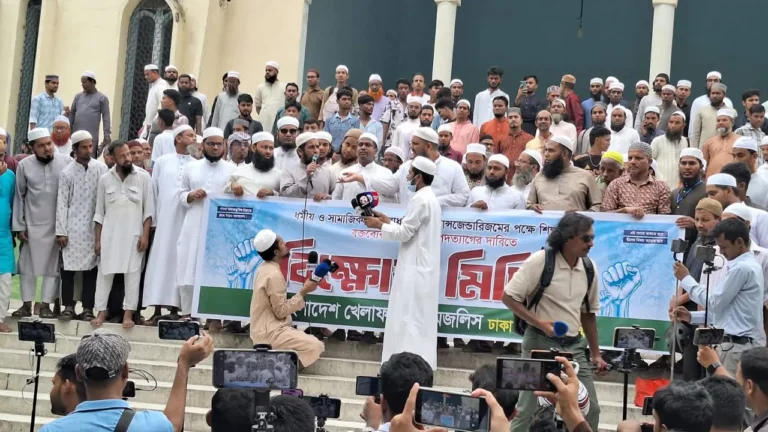
The board also decided to organise a campaign opposing the proposed legislation and transgender recognition. According to a report published by UCA News on 16 January, members unanimously agreed to work against the passage of the proposed law and planned to disseminate their position through religious publications, leaflets, seminars and press conferences. Board member Mufti Mizanur Rahman Sayed publicly argued that Muslims should oppose legal recognition of transgender people, claiming that gender transition was prohibited under Islam. Members further alleged that the proposed legislation would promote homosexuality and introduce Western cultural practices that they considered incompatible with Islamic values. Their campaign sought to mobilise religious opposition to the proposed law by presenting transgender recognition as a religious and social issue. The meeting followed earlier opposition from religious institutions, including a fatwa issued by scholars associated with Hathazari Madrasa on 27 December 2023 and a statement by Hefazat-e-Islam Bangladesh on 5 January 2024.
The campaign also drew responses from transgender rights advocates. In the UCA News report, Tanisha Yeasmin Chaity, a transgender woman and activist, challenged the board members’ association of transgender identity with homosexuality and expressed concern about the campaign’s consequences for transgender people. She described the campaign as a threat to her community and spoke about the discrimination transgender people faced in employment, education and everyday social life. Chaity, who was pursuing a master’s degree at Bangladesh Open University, said she had previously been forced to leave jobs because of discrimination related to her gender identity. She expressed concern that organised religious campaigning against transgender recognition could affect her opportunities for education and economic independence. The proposed legislation, prepared through the Ministry of Social Welfare, included provisions concerning legal recognition and access to education, healthcare and property rights.
References
Our Islam — হাইআতে চলছে জরুরি বৈঠক, আসতে পারে ট্রান্সজেন্ডার বিষয়ে গুরুত্বপূর্ণ ফতোয়া (13 January 2024)
UCA News — Bangladeshi Islamists Oppose Transgender Protection Law (16 January 2024)
The Monthly Alkawsar — শরীয়তের দৃষ্টিতে ট্রান্সজেন্ডার ও ট্রান্সজেন্ডার মতবাদ: একটি প্রামাণ্য ফতোয়া
Muslim Bangla — National Fatwa Board’s Religious Ruling on Transgender Identity (15 January 2024)