Shahidullah Hall AGS Ibrahim Khalil’s Residential Seat Temporarily Cancelled Following Same-Sex Allegations Involving Two Visitors
2 August 2026
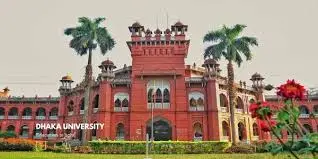
The administration of the University of Dhaka’s Dr Muhammad Shahidullah Hall temporarily cancelled the residential seat of Hall Students’ Union Assistant General Secretary Ibrahim Khalil after allegations concerning same-sex conduct involving two visitors in his room became public. The decision followed the circulation of a video on social media in which the two visitors were presented as admitting to same-sex conduct. Hall Provost Professor Md Aminul Islam Bhuiyan confirmed that Khalil’s seat had been temporarily cancelled and said an investigation would determine what further action, if any, would be taken. The administrative measure formed part of the wider institutional response to an incident that had occurred on 27 July but became publicly known after the video circulated on 1 August.
Khalil was not one of the two individuals accused of engaging in same-sex conduct. He was the elected Assistant General Secretary of the Dr Muhammad Shahidullah Hall Students’ Union, and Prothom Alo reported that he had been elected in the 2025 hall election with the support of Islami Chhatra Shibir. The president of the Dhaka University branch of Islami Chhatra Shibir, Muh. Mohiuddin Khan, also confirmed to Prothom Alo that Khalil was a Shibir activist. Khalil publicly distanced himself from the alleged conduct, saying that although the incident was alleged to have occurred in his room, he had no prior knowledge of or involvement in it. He said the two visitors had come for medical purposes, that he had allowed them to stay in his room, and that he was not present when the alleged incident occurred.
The original public narrative surrounding the incident relied heavily on a video portraying the two visitors as having confessed to same-sex conduct and apologised. Khalil’s roommate, Anoy Chowdhury, publicly alleged that the two visitors had been found in an intimate situation in Khalil’s room on 27 July and that their statements and confessions had subsequently been taken. The circulation of the video generated significant attention on campus and was followed by a protest by a group of Shahidullah Hall students. The hall administration then temporarily cancelled Khalil’s seat and constituted an investigation rather than announcing a final disciplinary decision.
A subsequent account from the two visitors substantially complicated the narrative surrounding the circulated video. On 3 August, Dhaka Post reported statements from the two men alleging that the purported confession had not been given voluntarily. One of them, identified as Farhan, alleged that Yusuf Arefin Rumel entered the room while the two visitors were sitting near a window watching a drama on a mobile phone, repeatedly questioned them and pressured them to admit to homosexuality. According to Farhan, they were instructed to make statements to the effect that they had made a mistake and had been misled by temptation, and they complied because they were frightened and under pressure. The other visitor, Arman, gave a similar account, alleging that he was told to make a recorded statement admitting wrongdoing. Dhaka Post reported their allegations as claims by the two affected individuals rather than independently established findings.
The allegations concerning coercion are important to the broader documentation of the Shahidullah Hall incident because the circulated recording had initially been treated publicly as evidence of a voluntary confession. If the visitors’ later accounts are considered alongside the original reports, the evidentiary picture is contested: the initial social-media narrative described the recording as a confession, while the individuals appearing in it subsequently alleged that their statements had been dictated or extracted through fear and pressure. The hall administration’s investigation therefore unfolded in an environment in which highly sensitive allegations concerning the visitors’ actual or perceived sexual orientation had already been publicly circulated before the investigation reached a conclusion.
The investigation itself subsequently became the centre of further campus conflict. On 2 August, while the hall-appointed committee was conducting its inquiry and Khalil and his roommate had been summoned, activists of Islami Chhatra Shibir and Jatiyatabadi Chhatra Dal clashed in and around the provost’s office. Both organisations blamed the other for initiating the violence. Chhatra Dal representatives accused Shibir of attempting to protect Khalil and used allegations about “promoting homosexuality” as part of their political accusations, while Shibir and Hall Students’ Union representatives presented a different account of how the confrontation began. The incident therefore moved beyond the original allegations involving the two visitors and became entangled with competing student-political narratives.
The temporary cancellation of Khalil’s residential seat is significant as an institutional consequence of the controversy, but it should be distinguished from the treatment experienced by the two visitors whose actual or perceived sexual orientation became publicly exposed. Available reporting does not identify Khalil as one of the individuals accused of same-sex conduct, and he denied prior knowledge or involvement. His seat cancellation is therefore best understood as part of the administrative and political aftermath of the underlying incident rather than as evidence that he was himself targeted because of actual or perceived sexual orientation. Public reporting reviewed for this documentation establishes that the cancellation was temporary pending investigation; it does not establish a subsequent final decision restoring or permanently cancelling his seat.
The case also exposed a broader institutional issue at the University of Dhaka. In a subsequent examination of the university’s disciplinary framework, Prothom Alo reported that neither the University of Dhaka Order, 1973 nor the hall regulations specifically identified homosexuality as a separate disciplinary offence or prescribed a specific punishment for it. University officials nevertheless told the newspaper that the administration was considering developing a formal policy addressing such allegations. This context is important because the Shahidullah Hall investigation, Khalil’s temporary seat cancellation and the treatment of the two visitors unfolded without an existing university rule specifically defining homosexuality as a disciplinary offence.
References
Reports the temporary cancellation of Ibrahim Khalil’s residential seat, the investigation, his response, his position as Hall Students’ Union AGS and his affiliation with Islami Chhatra Shibir.
Read the Prothom Alo reportReports Khalil’s account that he had no prior knowledge of or involvement in the alleged conduct and identifies him as a Chhatra Shibir activist.
Read the bdnews24.com reportProvides contemporary reporting on the circulated video, temporary seat cancellation and hall administration’s decision to investigate.
Read the Kalbela reportContains the two visitors’ subsequent accounts alleging that they were pressured into making the statements presented publicly as a confession.
Read the Dhaka Post reportDocuments the confrontation between the two student organisations while the hall investigation was underway and presents competing accounts of the clash.
Read the Prothom Alo English reportExamines the university’s disciplinary framework and reports that existing university and hall regulations did not specifically identify homosexuality as a separate disciplinary offence or prescribe a specific punishment.
Read the Prothom Alo English analysis