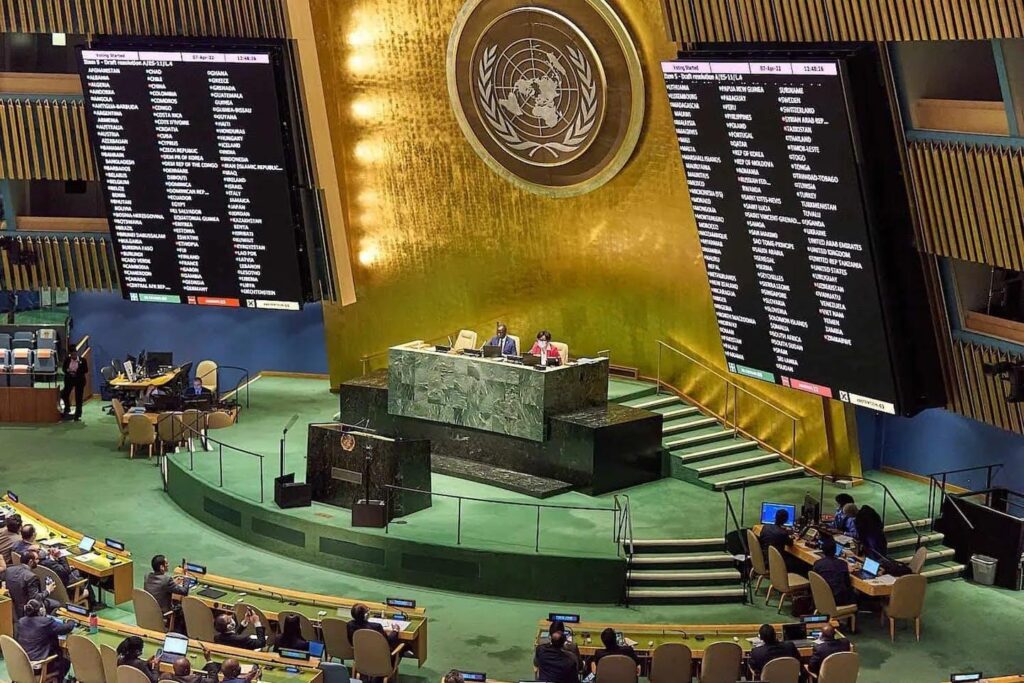
The draft resolution (A/C.3/81/L.37/Rev.1), introduced by Finland on behalf of the Nordic countries, calls upon states to investigate unlawful killings, prevent impunity and ensure accountability. Its operative paragraph 8(b) identifies individuals particularly vulnerable to such killings, including those targeted because of their sexual orientation or gender identity. The proposed amendment sought to remove these explicit references and replace them with broader language concerning individuals at heightened risk of unlawful executions.
The European Union opposed the amendment, stating that the identification of vulnerable groups was based on evidence documented by UN human rights mechanisms. It also noted that broader language covering other circumstances had already been incorporated into the draft resolution, meaning that the proposed amendment would effectively remove the specific recognition of individuals targeted because of their sexual orientation or gender identity.
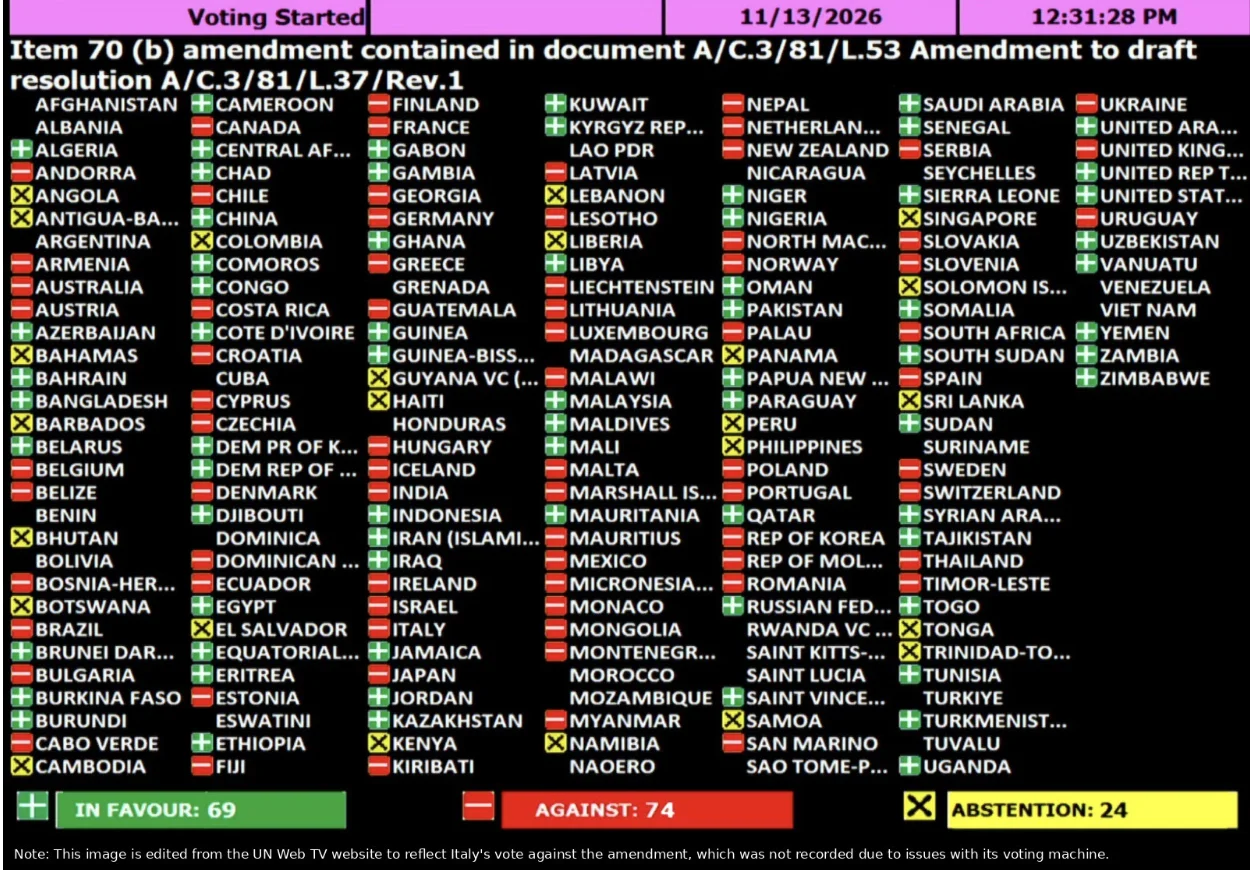
The amendment was narrowly rejected, with 74 countries voting against, 69 in favour and 24 abstaining. Bangladesh voted alongside Pakistan, Saudi Arabia, Iran, Indonesia, Malaysia, China, Russia and the United States in support of the amendment.
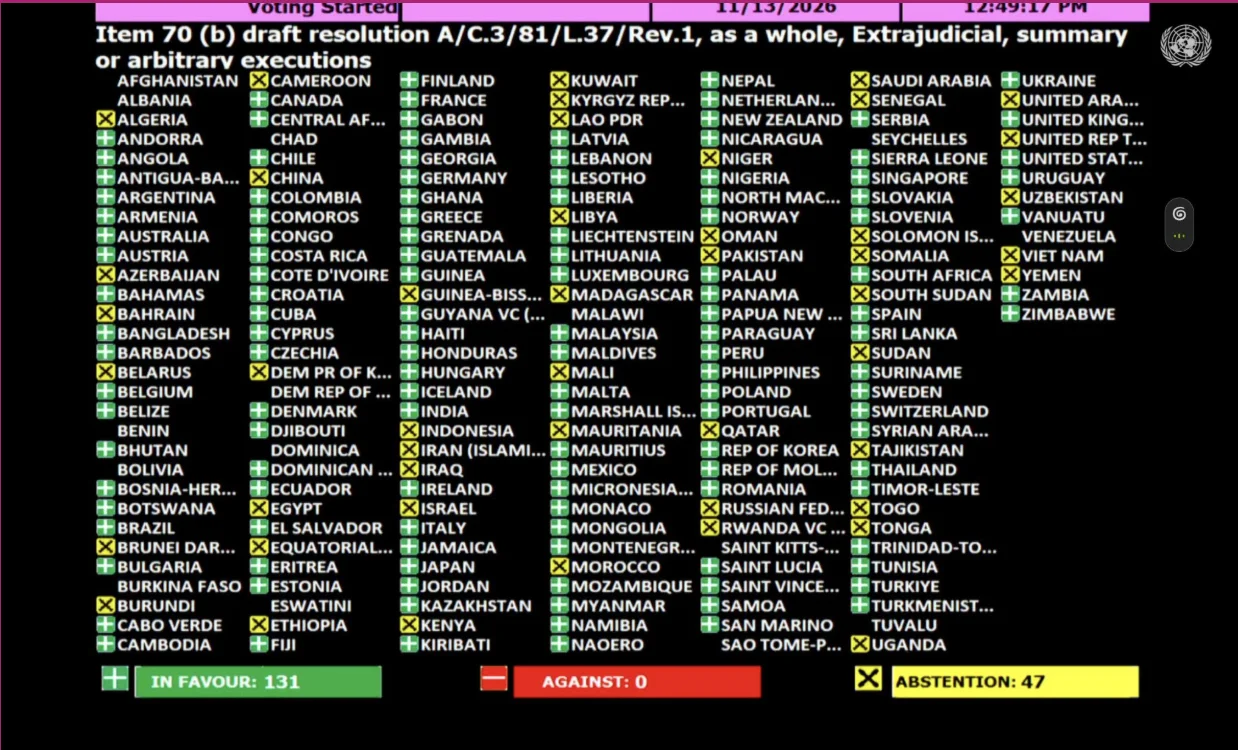
Following the rejection of the amendment, the Third Committee approved the draft resolution with 131 votes in favour, none against and 47 abstentions, retaining explicit references to sexual orientation and gender identity. Bangladesh also voted in favour of the resolution as a whole, despite its earlier support for removing these references.
Bangladesh has previously supported similar amendments, including in 2022 and 2024. In November 2024, the country co-sponsored amendment A/C.3/79/L.62, which sought to replace the references to sexual orientation and gender identity with the term “sex”. While the 2024 amendment was rejected by a margin of 31 votes, the margin narrowed to five votes in 2026.
The latest vote comes amid documented incidents of killings, death threats, targeted violence and discrimination against LGBTIQ+ individuals and human rights defenders in Bangladesh. Ahead of the vote, Outright International, Amnesty International, Human Rights Watch, ILGA World and the International Service for Human Rights called upon UN member states to retain the explicit recognition of vulnerable groups in the resolution. Their joint letter received support from 127 organisations and 2,149 individuals across 112 countries.
The draft resolution, with the references to sexual orientation and gender identity retained, is expected to be considered by the full United Nations General Assembly in December 2026. The plenary proceedings will determine the final adoption of the resolution.
References
- United Nations Digital Library.
Official amendment A/C.3/81/L.53, listing Bangladesh among its co-sponsors, 11 November 2026.
Read the official document. - United Nations.
Revised draft resolution on extrajudicial, summary or arbitrary executions, A/C.3/81/L.37/Rev.1.
Read the draft resolution. - Outright International.
UN Committee Refuses to Erase LGBTQ Victims From Resolution on Unlawful Killings, 13 November 2026.
Read the report and voting records. - European Union.
Explanation of vote delivered at the UN General Assembly’s Third Committee on 13 November 2026.
Read the official statement. - Human Rights Watch.
Joint letter to UN Permanent Representatives urging the continued protection of vulnerable groups, November 2026.
Read the joint letter. - United Nations.
Amendment A/C.3/79/L.62, co-sponsored by Bangladesh in November 2024.
Read the 2024 amendment. - United Nations.
Third Committee records of amendment A/C.3/77/L.66, co-sponsored by Bangladesh in 2022.
Read the 2022 records.